
Indonesia Promotes KHDTK as the Foundation for Developing the Asian Living Lab

Ulaanbaatar, 13–14 May 2025 — At the 12th Session of the Asian Forest Cooperation Organization (AFoCO) Assembly, Indonesia reaffirmed its commitment to sustainable forest management by advancing the initiative of an Asian Living Laboratory (Living Lab). The Indonesian delegation, led by Head of the Center for Sustainable Forest Development (P2HB), Gun Gun Hidayat, emphasized that Living Labs are essential for capacity building, climate change impact measurement, and innovation in sustainable forest management. This initiative is intended to bridge science, policy, and practical implementation at the field level. Indonesia also shared its best practices in managing Special Purpose Forest Areas (KHDTK) as Living Labs. In support of this initiative, Indonesia is currently updating its official data on KHDTK. To date, there are 99 KHDTK units under research and training purposes, covering a total area of 157,088 hectares. “Living Labs contribute not only to education and research but also play a strategic role in broader forest governance, including conservation, restoration, and the formulation of technical biodiversity protection policies,” added Gun Gun Hidayat. Beyond the Living Lab initiative, the 12th AFoCO Assembly also addressed opportunities in climate financing, green investment, and partnerships with the private sector. Representatives from Artha Network Inc, Economics of Mutuality (EOM), and Merry-Year Social Company (MYSC) were present to explore collaboration with AFoCO member countries. The session concluded with the announcement of the next assembly and Mongolia’s readiness to host the UNCCD COP 17 in 2026. The Indonesian head delegate expressed sincere appreciation to the Mongolian Forest Department for their warm hospitality and excellent organization of the 12th AFoCO Assembly.***
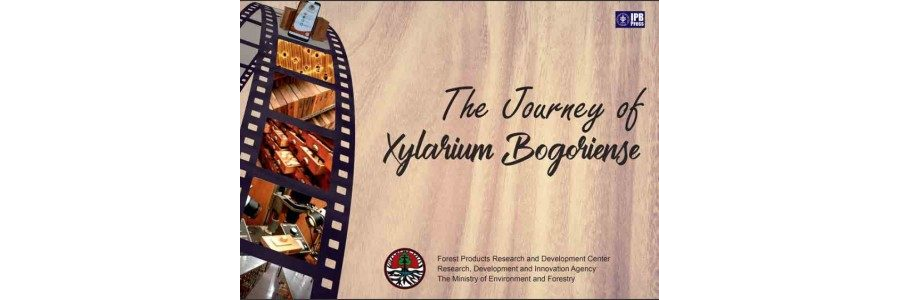
Journey of Xylarium Bogoriense
Tumbuhan Berkhasiat Obat Etnis Asli Kalimantan

Tumbuhan Obat dan Herbal dari Hutan untuk Penyakit Degeneratif Metabolik Gaya Hidup Kembali ke Alam

KOFFCO Technology: A Breakthrough to Save the Endangered Kokoleceran Tree (Vatica bantamensis)

Bogor, February 27, 2025 – Efforts to save Vatica bantamensis, locally known as Kokoleceran—a rare tree species endemic to Ujung Kulon—have entered a new phase. The Center for Sustainable Forest Development (P2HB) has partnered with the Directorate of Scientific Collections Management at the National Research and Innovation Agency (BRIN) to propagate the species using the KOFFCO system, an advanced shoot cutting propagation technology proven to be effective. Kokoleceran is one of Indonesia’s endemic species facing a serious threat of extinction. With its limited population and narrow habitat range, the survival of this tree depends heavily on targeted conservation actions. The KOFFCO system offers a solution by creating optimal conditions for shoot cuttings to grow, including controlled humidity, temperature, and light exposure. “We see this as a positive step. Collaboration across institutions is crucial for the sustainability of the Kokoleceran propagation program,” said Wiharyanto, a representative from BRIN. In addition to preserving Kokoleceran, the KOFFCO technology is also being applied to propagate dipterocarp species and other native plants. In 2024 alone, the KOFFCO nursery in Gunung Batu successfully produced over 10,767 seedlings, which were later used in forest rehabilitation and reforestation programs. Spanning an area of 2,500 m², the Gunung Batu KOFFCO Nursery is equipped with greenhouses and a collection garden of rare plants. It serves not only as a center for producing high-quality seedlings but also as a living laboratory for communities and forestry practitioners to learn about advanced plant propagation techniques. This initiative brings renewed hope for the conservation of Kokoleceran and the preservation of Indonesia’s biodiversity. With strong collaboration and appropriate technology, Indonesia’s forests can remain green, resilient, and beneficial for generations to come. ***
Vietnam Delegation Impressed by Xylarium Bogoriense: The World’s Largest Wood Library
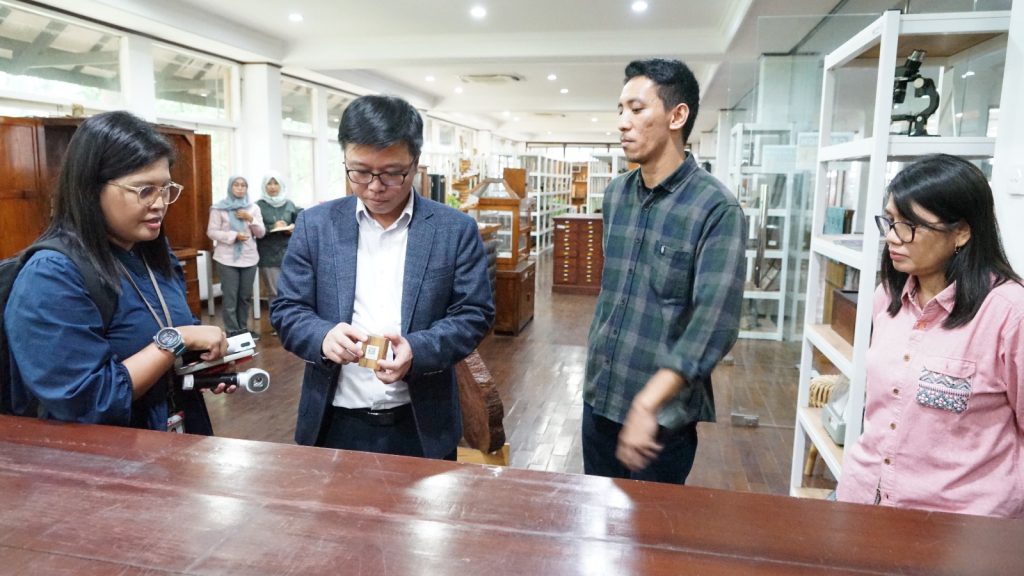
Bogor, 6 February 2025 – A delegation from Vietnam recently visited Xylarium Bogoriense, Indonesia’s renowned wood collection, and was profoundly impressed by the extensive range and scientific significance of the specimens on display. Located within the Center for Sustainable Forest Development, Xylarium Bogoriense houses over 206,000 authenticated wood samples that represent approximately 6,700 species, including more than 100 varieties of bamboo and rattan, as well as ancient wood fossils. Established in 1914, the Xylarium Bogoriense is recognized as the world’s largest xylarium. These specimens encompass approximately 110 plant families and thousands of genera and species, making them a comprehensive resource for research and education. During their visit, the Vietnamese representatives expressed admiration for the systematic organization and thorough documentation of the collection. “The variety and quality of these wood specimens are exceptional,” commented one member of the delegation. “This collection is invaluable for research on wood anatomy, the identification of forestry species, and sustainable utilization.” Xylarium Bogoriense plays a vital role in supporting initiatives in forest science and technology. It serves researchers, academics, students, and policymakers for purposes such as anatomical analysis, taxonomy, forensic wood identification, and conservation planning. Additionally, the collection promotes cross-border cooperative research, particularly among ASEAN countries. This visit highlights Indonesia’s leadership in tropical forestry science and its commitment to sharing knowledge that fosters sustainable forest product development across Southeast Asia. The Center for Sustainable Forest Management Development continues to develop programs that promote research collaboration, capacity building, and innovation in the forestry sector. As ASEAN nations strengthen their collaboration in sustainable forestry, facilities like Xylarium Bogoriense become essential assets that enhance regional forestry research, education, and innovation. **Published by:** Center for Sustainable Forest Development (P2HB) Ministry of Environment and Forestry, Indonesia
Developing the WMC Information System: Indonesia’s Strategic Step Toward Becoming a Global Mangrove Center

To strengthen Indonesia’s position as a global leader in mangrove management, the Center for Standardization of Sustainable Forest Management Instruments (Pustarhut) is developing the Wetland Management Center (WMC) Information System. This step aligns with the country’s commitment to implementing science- and technology-based forest and wetland conservation policies. The WMC Information System is designed as a central platform for data integration, knowledge sharing, and coordination among various stakeholders, including policymakers, researchers, and local communities. This system is expected to provide real-time and reliable data related to mangrove ecosystems and wetland areas across Indonesia. It will also serve as a reference point for national and international collaborations in wetland ecosystem restoration and protection. In a series of discussions and consultations, Pustarhut has collaborated with experts and partners to design the system’s architecture and define its key features. The initiative is part of a broader strategy to support Indonesia’s leadership in the ASEAN region and globally in the field of sustainable mangrove ecosystem development. The platform will also strengthen Indonesia’s role in achieving global environmental goals, including climate change mitigation and biodiversity conservation. By building the WMC Information System, Indonesia is not only investing in a national database but also paving the way toward becoming a center of excellence for mangrove knowledge, policy, and innovation at the global level.***
PuSTARhut at COP 29: Highlighting Community Role and Standards in Mangrove Management
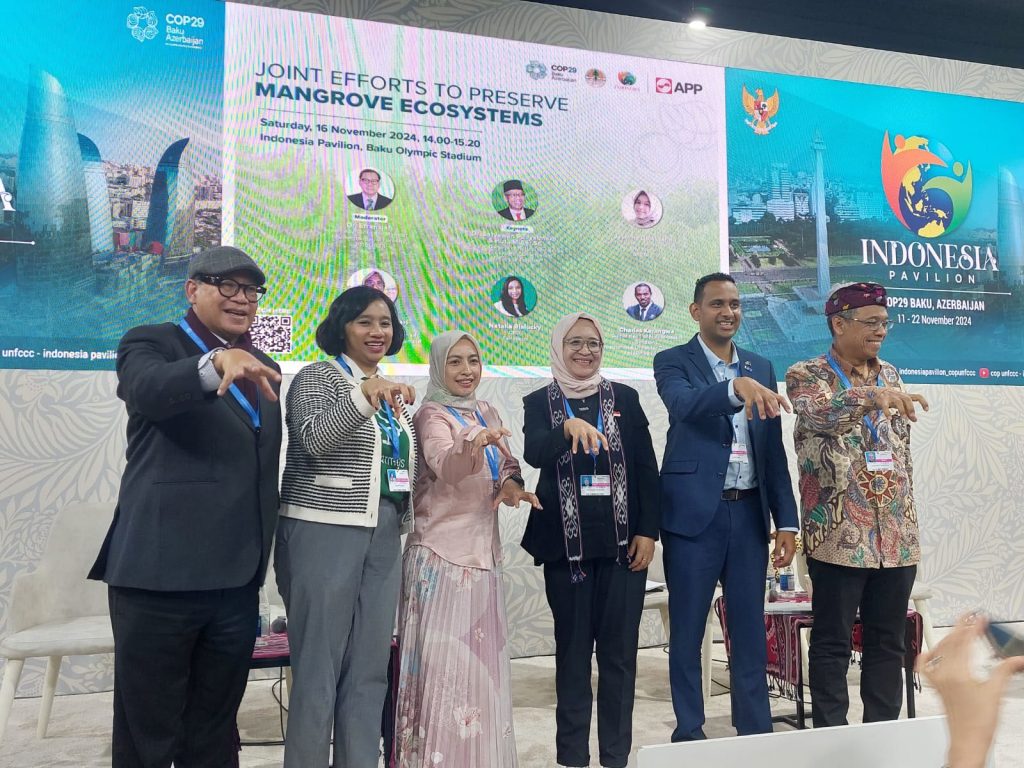
Baku, 16 November 2024 — The Center for Standardization of Sustainable Forest Management Instruments (PuSTARhut) actively participated in a talk show at the Indonesian Pavilion during COP 29 held in Baku, Azerbaijan. The event, initiated by APP Group, was themed “Joint Efforts to Preserve Mangrove Ecosystems.” Speakers included Jasmine Doloksaribu (APP Group), Wening Sri Wulandari (PuSTARhut), Natalia Rialucky (Fairatmos), and Charles Karangwa (IUCN). In his keynote address, Prof. Satyawan Pudyatmoko, Director General of Natural Resources and Ecosystem Conservation, emphasized the importance of robust governance in mangrove conservation programs: “Mangrove conservation must uphold three principles: ecosystem sustainability, species protection, and biodiversity,” he asserted. Community Engagement: A Key to Success Wening Sri Wulandari, Head of PuSTARhut, presented on Sustainable Mangrove Management Through Innovative and Collaborative Actions, stressing the critical role of local communities: “Communities are key actors in successful mangrove management, as they interact directly with mangroves on the ground,” she stated. She cited a successful collaboration example: restoration of mangroves on former fishponds in Sumbawa, West Nusa Tenggara, coordinated by KPH Amplang Plampang and supported by AFoCO. Standards in Support of Mangrove Management PuSTARhut also highlighted achievements in developing technical standards, including SNI for mangrove seed and seedling handling, and the initiation of the World Mangrove Center, backed by the Government of Germany. “Indonesia has developed best practices for mangrove management, information systems, and regional mangrove centers, which should be managed, documented, and disseminated to stakeholders nationally and internationally. Furthermore, many partner countries are seeking collaboration with Indonesia in mangrove management and require policy guidance,” Wening explained during her presentation. Insights from Other Speakers Jasmine Doloksaribu (APP Group) highlighted successful mangrove conservation and rehabilitation programs in Jambi, South Sumatra, Tangerang, and Banten. Meanwhile, Natalia Rialucky (Fairatmos) discussed carbon pricing and the development of systems to facilitate monitoring of rehabilitation success and calculating carbon stocks. Ria pointed out ongoing challenges in mangrove rehabilitation, particularly technical barriers related to proper planting techniques and the importance of technology in monitoring success. Interactive Dialogue and Audience Engagement Moderated by Dr. Efransyah, the talk show prompted enthusiastic participation from over 50 attendees representing countries such as Japan, Korea, Gambia, and others in Africa. Participants showed interest in silvofishery rehabilitation techniques, addressing Nypa palm as an invasive species in mangrove ecosystems, and exploring systems for monitoring and evaluation of rehabilitation efforts. Recommendations and Next Steps The session concluded with a recommendation that Indonesia host an international forum to share knowledge, best practices, and policy strategies among stakeholders involved in mangrove conservation and rehabilitation, including government initiatives such as the World Mangrove Center.
PUSTARHUT Participates in the Eleventh Session of the Assembly of AFoCO, Supports the Initiative for Developing a Mangrove Exhibition

The Center for the Development of Sustainable Forest Management Instruments (PUSTARHUT) participated in the Eleventh Session of the Assembly of the Asian Forest Cooperation Organization (AFoCO), which took place on March 5–7, 2024, in Seoul, Republic of Korea. As part of the Indonesian delegation led by the Director of the Center for International Cooperation of the Ministry of Environment and Forestry (MoEF), PUSTARHUT expressed support for the initiative to develop a Mangrove Exhibition as part of the ASEAN-Korea Forest Cooperation. This session was officially opened by Mr. Lee Hyeon Uk, Chair of the Eleventh Session of the Assembly of AFoCO and Director General of the Korea Forest Service (KFS). In his remarks, he emphasized the importance of strengthening collaborative efforts to address climate change through forest-based approaches, including the sustainable management of forest resources and the development of social forestry. PUSTARHUT’s involvement in the session was marked by its support for Indonesia’s proposal to develop a Mangrove Exhibition. The initiative aims to promote knowledge exchange, raise public awareness, and strengthen regional collaboration on mangrove ecosystem conservation, which aligns with Indonesia’s commitment to achieving its FOLU Net Sink 2030 target. The proposed Mangrove Exhibition will serve as a platform to showcase best practices, research, and technological innovations in mangrove restoration and management across ASEAN countries and Korea. The exhibition is expected to be a part of a broader effort to enhance public understanding and stakeholder engagement in the conservation of coastal and marine ecosystems. During the session, AFoCO member countries also shared updates on national programs, ongoing projects, and future collaboration plans under the organization’s framework. The Indonesian delegation took the opportunity to highlight its key initiatives, including community-based forest management, forest fire control strategies, and the implementation of standards in forest resource development. Through this participation, PUSTARHUT reinforces its role in regional forest diplomacy and its dedication to strengthening cooperation in sustainable forest management and environmental protection in the Asia-Pacific region.
Strengthening Wood Anatomy Knowledge, Sarawak Visits Xylarium Bogoriense

Bogor, October 15, 2024 – Today, seven forestry experts from the Sarawak Forestry Department, Malaysia, visited Xylarium Bogoriense located at the Sustainable Forest Management Instrumentation Standardization Center (PuSTARhut) Campus in Bogor. The visit aimed to explore wood anatomy and wood identification technologies, marking an important moment in strengthening collaboration between Malaysia and Indonesia. The Research and Development Division of the Sarawak Forestry Department manages its xylarium with no fewer than 16,000 wood samples. Through this visit, they hoped to learn best practices from Indonesia in managing a xylarium. A xylarium is essentially a wood library—a specialized collection that stores various wood specimens. Xylarium Bogoriense is managed by PuSTARhut under the Environmental and Forestry Instrumentation Standardization Agency. Wening Sri Wulandari, Head of PuSTARhut, personally welcomed the visit. “Welcome to Xylarium Bogoriense, the largest xylarium in the world, established in 1915, with over 200,000 authentic wood specimens—not only wood but also rattan, bamboo, and petrified wood,” said Wening. She further explained that Xylarium Bogoriense now serves as a reference for data and information used in developing standards and providing wood identification testing services. “PuSTARhut is tasked with formulating forest management standards. The availability of data and information in this xylarium is a crucial reference in the development of standards, especially for timber forest product management,” Wening added. Runi Sywesta Pungga, the team leader from Sarawak, shared her impressions of the visit. “It’s a rare and valuable opportunity to exchange knowledge and experience with Xylarium Bogoriense,” she said. Runi mentioned that Central Sarawak is currently developing an artificial intelligence-based wood identification system called the Sarawak Wood Identification System (SWIDS), similar to Indonesia’s AIKO (Automated Wood Identification Tool). SWIDS, however, still faces implementation challenges. “Our main issue is obtaining perfect wood samples to generate good-quality images for data input,” said Teng Xin Yao, a member of the Sarawak Forestry Department’s Research and Development Division who joined the visit. Jorgy, the curator and lab analyst of the xylarium, provided an overview of the facility. “Xylarium Bogoriense stores uniquely shaped trapezoidal specimens, designed to make identification easier and data more accurate. In addition to trapezoids, we also keep block-shaped samples, micro slides, and wood disks,” Jorgy explained. In addition to discussions and knowledge exchange, the delegates had the opportunity to observe various wood specimens and wood products housed in Xylarium Bogoriense. They were particularly impressed with the batik collection inspired by wood anatomy structures displayed in the lobby. The visit concluded with a group photo. It is hoped that this visit will yield meaningful benefits in enhancing forest management knowledge and biodiversity conservation in both countries. ***